基本
Base Set (2008)
26 枚
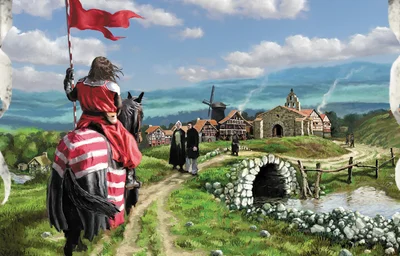
評価
ドミニオンの「村系(+2アクション以上を持つアクションカード)」の代表格にして原点。+1ドローが付くため非ターミナルとして手札枚数を減らさず、追加で2アクション権を生み出す。コスト3で買える基本的な道具で、ターミナルアクション(鍛冶屋・魔女など)を毎ターン複数発射するエンジン構築の必須パーツ。
単体で見ると「カード1枚引いてアクションが+2される」だけだが、デッキを引き切るエンジンを目指す場合は、村なくしては成立しない構築がほとんど。鍛冶屋(+3カード/ターミナル)と村を組み合わせると「鍛冶屋を打ってもまだアクションが残る → 次のターミナルが打てる」状況が生まれ、デッキを連続的に展開できる。
総合評価A〜S級(環境に大きく依存)。サプライに村以外の村系カードがない場合は購入優先度が跳ね上がる。逆に城塞・村落・職工長のような上位村が同卓にある場合は相対的に評価が下がる。
ドミニオンの理論で「村-鍛冶屋エンジン」と呼ばれる典型的な構築では、村と鍛冶屋を1:1の比率で集めるのが基本。実際は微調整が必要で、村1枚 + 鍛冶屋1枚 + 銀貨/金貨で5金以上に届くか、を目安にバランスを取る。
使い方・立ち回り
開局フェーズではコスト3で買える定番カード。4/3スプリットで3金枠を村に充てるパターンが多い。ただし、4/3で3金しかないときに「銀貨ではなく村を買うべきか」は卓のサプライ次第。ターミナルアクションが豊富で、エンジン構築方針なら村優先。ステロイド方針(銀貨・金貨積み上げで属州を買う方針)なら銀貨優先。
中盤は村を2〜4枚集めるのが定石。エンジンに必要な村の枚数は「ターミナルカードの数 + α」で計算する。例: 鍛冶屋3枚 + 魔女1枚 = ターミナル4枚 → 村3〜4枚が目安。村が足りないとターミナルが衝突して機能不全、村が多すぎるとアクション権が余る。
終盤は「もう村を増やすか、属州を取るか」の選択。エンジンが安定してアクション権が余り気味なら属州購入優先。逆にまだ毎ターン安定して手札を引き切れていないなら追加の村で安定性を高める。
主要なエンジン構築パターン
村-鍛冶屋エンジン: 最も基本的な構築。村と鍛冶屋を1:1の比率で集め、+3ドロー×複数発射で手札を増やしていく。村1枚 + 鍛冶屋1枚 = 実質「+3カード/+1アクション」相当。
村-議事堂エンジン: 議事堂は+4カード/+1購入のターミナル。村を多めに用意して議事堂を毎ターン2回打つ構築。+1購入で属州を一気に複数買う動きにつながる。
村-魔女エンジン: 村を入れることで毎ターン魔女2発が安定し、相手のデッキを呪いで急速に汚染する。村2枚 + 魔女2枚で1ターン呪い2枚配布が目安。
村-玉座の間エンジン: 玉座の間でターミナルを2回プレイするには、その後にも村でアクション権を残しておく必要がある。村-玉座-ターミナルのチェーンが基本。
相性の良いカード
- 鍛冶屋: 村-鍛冶屋エンジンの片翼。1:1で集めるのが目安。
- 議事堂: +4ドロー/+1購入のターミナル。村で複数発射すれば1ターンで手札補充+属州複数買い。
- 魔女: 呪い撒きアタック。村で複数回発射が呪い戦争の必勝パターン。
- 玉座の間: 玉座の間自身もターミナルなので、村でアクション権を確保。
- 礼拝堂: 圧縮で村が引きやすくなり、エンジン安定性が増す。
- 民兵・盗賊: ターミナルアタックを毎ターン発射するために村が必須。
- 工房・改築: ターミナルだが獲得カードを増やすので、村と組み合わせて毎ターン獲得。
- 鉱山: ターミナルの財宝改良。村で他のターミナルと併用。
相性の悪いカード・苦手な状況
- ステロイド戦略: 銀貨/金貨を積み上げて属州を買う方針では、村の +2アクションが活きない。村を買う代わりに銀貨を買う方が金量が伸びる。
- 上位村系がある卓: 城塞(+1カード/+2アクション/廃棄時手札に戻る)、村落(特殊効果付き)、職工長(高効率)などが同卓にあると、コスト3の村は相対的に弱い。
- ターミナルが少ないサプライ: アクション権を消費するカードが少ないとアクション権が余り、村の価値が薄れる。
- 圧縮ができないサプライ: 廃棄カードがない卓では銅貨の密度が下がらず、村-ターミナルエンジンが回りにくい。
派生村系カード
ドミニオンには各拡張に村系カードが多数存在し、村は最も基本的な存在:
- 漁村(海辺): コスト3。+1アクション。次ターン+1アクション+1金。持続型村。
- 港町(海辺): コスト4。+1カード/+2アクション。次ターン+1カード。
- 城塞(暗黒時代): コスト4。+1カード/+2アクション。廃棄時手札に戻る。
- 大広間(陰謀): コスト3。+1カード/+1アクション+勝利点1。サブ村。
- 国境の村(異郷): コスト6。+1カード/+2アクション+カード1枚獲得(コスト村未満)。
- 鍛冶場(暗黒時代): コスト4。+1カード/+2アクション。終盤勝利点。
- 不正利得(陰謀): コスト5。+1カード/+1購入/+2金。コイン重視村。
- 王女(プロモ): コスト4。+2カード/+2アクション。コスト6相当の効果がコスト4。
サプライに村系が複数ある場合、効果の組み合わせやコスト効率で優先度を判断する。基本的にコスト4以上の村系(漁村・城塞・港町など)が出ている場合は、それらを優先したほうがいいことが多い。
上級プレイのコツ
「村1枚で何が起こるか」を考えるとき、+1ドローも忘れずに計算する。村は単に+2アクションだけのカードではなく、実質「+1カード」も付いた優秀なカード。村3枚を続けてプレイすると+3ドロー+6アクションになる(ただし最後のアクションは消費されない)。
エンジンの完成度を測る指標として「毎ターンデッキを引き切れるか」がある。村と鍛冶屋系(ドロー)の枚数が、デッキ全体に対して十分かをチェック。
「村-村-村-鍛冶屋」のように村を連打して最後にターミナルを打つよりも、「村-鍛冶屋-村-鍛冶屋」のように交互に打ってドローを稼ぐ方が効率が良い場合が多い。手札の引き順とアクション権を両方意識する。 :::
::: en
Village
Basic Info
- Type: Action
- Cost: 3
- Effect: +1 Card / +2 Actions
Rating
The archetypal +Action card and origin of the entire "Village" archetype in Dominion. Being non-terminal (+1 card means it doesn't reduce hand size) and granting two extra Actions, Village is the foundational tool that enables you to chain multiple terminal actions per turn. At cost 3, it's the cheapest reliable way to break the one-action-per-turn limit.
In isolation, Village just gives a cantrip plus extra Actions, but engines that aim to draw the whole deck are nearly impossible without it (or a substitute). Pairing Village with Smithy (+3 cards, terminal) creates the situation where "after playing Smithy, you still have actions for another terminal" — the basis of the classic engine.
Overall A to S tier (heavily context-dependent). On boards with no other +Action source, Village's priority skyrockets. On boards with stronger villages (Fortress, Border Village, Mining Village), Village's relative value drops.
The classic "Village-Smithy engine" calls for a roughly 1:1 ratio of Villages to Smithies. The exact ratio depends on the supply, but the rule of thumb is: Village + Smithy + Silver/Gold should reliably hit 5+ coins per turn.
How to Play
In the opening, Village is a standard cost-3 buy. On a 4/3 split, Village is a common choice for the 3-coin slot. Whether to buy Village over Silver depends on the board: with abundant terminals and an engine plan, Village first; with a Big Money plan, Silver first.
Midgame, the standard line is 2-4 Villages. The needed count is "number of terminal cards + α." Example: 3 Smithies + 1 Witch = 4 terminals → 3-4 Villages. Too few Villages causes terminal collisions; too many wastes Action capacity.
In the endgame, the question becomes "more Villages or Provinces?" If your engine reliably draws and you have spare Actions, prioritize Provinces. If turns still stall on terminal collisions, buy additional Villages first.
Engine Patterns
Village-Smithy engine: The textbook build. Roughly 1:1 Villages to Smithies. Village + Smithy ≈ "+3 cards / +1 Action."
Village-Council Room engine: Council Room is a +4 cards / +1 buy terminal. Multiple Council Rooms per turn requires a stack of Villages and pays off in massive draw + multi-Province buys.
Village-Witch engine: Two Witches per turn devastate opponents. Two Villages + two Witches = stable double Curse cadence.
Village-Throne Room engine: Throne Room itself is terminal; Villages must be present to play TR + a target action with extra Actions remaining.
Synergies
- Smithy: The classic engine partner. Buy roughly 1:1.
- Council Room: +4 draw enables strong engine turns; needs Villages.
- Witch: Curse-spreading attack; multiple plays per turn collapses opponents.
- Throne Room: TR is terminal — Villages mandatory to chain past it.
- Chapel: Thinning makes Villages easier to find, stabilizing the engine.
- Militia / Bandit: Terminal attacks that benefit from multiple plays per turn.
- Workshop / Remodel: Gainers that scale with multiple plays.
- Mine: Terminal treasure upgrader; pair with Villages for repeat plays.
Counters & Bad Matchups
- Big Money strategies: BM doesn't use Action chains, so Village +2 Actions is wasted economy. Silver beats Village in pure money strategies.
- Boards with stronger Villages: Fortress (cost 4, returns from trash), Border Village (gain on buy), Bandit Camp, Wandering Minstrel — Village's priority drops sharply.
- Few terminals available: If the supply has limited terminals, extra Action capacity goes unused.
- No trashing available: Without thinning, Coppers clog the deck and Village engines stall.
Related Villages
Every major Dominion expansion ships at least one Village. Village is the most basic instance:
- Fishing Village (Seaside, 3): +1 Action, next turn +1 Action +1 Coin. Duration village.
- Worker's Village (Prosperity, 4): +1 Card / +2 Actions / +1 Buy. Often called "Village+."
- Fortress (Dark Ages, 4): +1 Card / +2 Actions, returns from trash. S-tier village.
- Great Hall (Intrigue, 3): +1 Card / +1 Action and worth 1 VP. Sub-village + light VP.
- Border Village (Hinterlands, 6): +1 Card / +2 Actions, gain a card costing less when bought.
- Hamlet (Cornucopia, 2): Cheap village with discard-for-bonus options.
- Bandit Camp (Dark Ages, 5): +1 Card / +2 Actions / gain Spoils.
- Patrician (Empires, 2): Half of split-pile, conditional draw.
- Festival (Base, 5): +2 Actions / +1 Buy / +2 Coins (terminal-village hybrid).
When multiple villages are on the board, prioritize by power level and cost-efficiency. Strong cost-4+ villages (Fishing Village, Fortress, Worker's Village, Bandit Camp) usually outclass plain Village.
Advanced Tips
When evaluating Village, don't forget the +1 card portion — it's a true cantrip plus +2 Actions. Three Villages played in sequence give +3 cards / +6 Actions (though the last action is uncast).
Engine completion is measured by "can you draw the whole deck every turn?" Check Village count vs. drawer count for sufficient ratio.
Order of plays matters: "Village-Smithy-Village-Smithy" alternation often outperforms "Village-Village-Village-Smithy" because draw is interleaved. Stay aware of both the draw order and remaining Actions throughout your turn. :::
::: zh
村莊
基本資訊
- 類型:行動
- 費用:3
- 效果:+1 卡牌 / +2 行動
評價
多明尼「村莊系(擁有 +2 行動以上效果的行動卡)」的代表與起源。+1 抽牌讓它非終結(不減手牌),再加 2 行動權,3 費可購買的基礎工具,是構築每回合多次發射終結行動引擎的必備零件。
單看是「抽 1 張牌、行動 +2」,但要組成抽完牌組的引擎,沒有村莊(或替代品)幾乎不可能。村莊 + 鐵匠(+3 抽、終結)創造「打完鐵匠還有行動」的局面,可以連續打出終結。
綜合評價 A 到 S 級(極度依賴環境)。場上沒有其他村莊系時優先度爆增;有更強村莊時相對掉價。
「村莊-鐵匠引擎」典型構築要求 1:1 比例。實際依場面微調,以「村莊+鐵匠+銀/金幣穩定到 5 費」為準。
玩法
開局 4/3 分配時 3 費槽常買村莊。要不要先買村莊還是銀幣,看終結卡多寡與構築方針——引擎方針優先村莊,大錢方針優先銀幣。
中盤目標 2-4 張村莊。所需數量為「終結卡數 +α」。例:鐵匠 3 + 女巫 1 = 4 終結 → 村莊 3-4 張。
終局抉擇「再加村莊還是買省份」。引擎穩定且行動有剩,省份優先;終結還會撞牆,補村莊優先。
引擎構築模式
村莊-鐵匠引擎:經典構築,1:1 比例。
村莊-議事堂引擎:+4 抽 +1 購買,搭配多張村莊一回合多省份。
村莊-女巫引擎:村莊 ×2 + 女巫 ×2 = 每回合 2 詛咒。
村莊-王座引擎:王座本身終結,需村莊保留行動。
推薦聯動
- 鐵匠:經典引擎搭檔,1:1。
- 議事堂:+4 抽 +1 購買終結。
- 女巫:詛咒散播,多次發射定勝負。
- 王座:王座是終結,需村莊。
- 禮拜堂:壓縮讓村莊更容易抽到。
- 民兵、山賊:終結攻擊。
- 工房、改造:獲得卡,搭村莊多次。
- 鐵匠、鑄幣:終結。
對策與不利場況
- 大錢戰略:不用行動鏈,村莊 +2 行動浪費。
- 更強村莊:堡壘、邊境村莊、山賊營地等使村莊掉價。
- 終結卡少:行動權浪費。
- 沒有廢棄:銅幣堵塞,引擎打不動。
相關村莊系卡
各大擴展都有村莊系,村莊是最基本:
- 漁村(海邊,3):+1 行動,下回合 +1 行動 +1 費。持續村莊。
- 工人村(繁榮,4):+1 抽 / +2 行動 / +1 購買。
- 堡壘(黑暗時代,4):+1 抽 / +2 行動,廢棄時回手。
- 大廳(陰謀,3):+1 抽 / +1 行動 + 1 勝利點。
- 邊境村莊(異郷,6):+1 抽 / +2 行動 + 獲得便宜卡。
- 哈姆雷特(豐收節,2):可棄牌獲得加成。
- 山賊營地(黑暗時代,5):+1 抽 / +2 行動 / 獲得戰利品。
- 慶典(基本,5):+2 行動 / +1 購買 / +2 費(終結村莊混合)。
多張村莊系在場時,看效率與費用優先級。
進階提示
評估村莊時別忘 +1 抽。連打 3 張村莊 = +3 抽 / +6 行動(最後動作未消耗)。
引擎完成度看「能否每回合抽光牌組」。村莊 vs 抽牌數量比例。
打牌順序:「村-鐵-村-鐵」交替通常勝過「村-村-村-鐵」,因為抽牌交織。 :::
::: ko
마을
기본 정보
- 종류: 액션
- 비용: 3
- 효과: + 카드 1장 / + 액션 2번
평가
도미니언「마을 계열(+2 액션 이상을 가진 액션 카드)」의 대표이자 시작점. +1 드로우가 붙어 비종결로 손패를 줄이지 않으며, 추가 2 액션 권한을 만든다. 3코스트로 살 수 있는 기초 도구로, 매 턴 종결 액션(대장간·마녀 등)을 여러 번 발사하는 엔진 구축의 필수 부품.
단독으로는 「카드 1장 + 액션 +2」지만, 덱을 다 뽑는 엔진을 목표로 하면 마을(또는 대체품) 없이는 거의 불가능. 마을 + 대장간(+3 카드, 종결) 조합은 「대장간을 친 뒤에도 액션이 남아 다음 종결을 칠 수 있는」 상황을 만든다.
종합 평가 A~S급 (환경 의존). 다른 마을이 없는 환경에선 우선도 폭등, 강한 마을(요새·국경 마을·산적 진영)이 함께 있으면 상대적 평가 하락.
「마을-대장간 엔진」 정석은 1:1 비율. 실제로는 미세 조정 필요. 「마을 + 대장간 + 은화/금화로 5코 안정 도달」을 기준.
활용법
오프닝에서 4/3 스플릿의 3코 자리 단골. 마을 vs 은화 선택은 보드의 종결 풍부도와 방침에 따름—엔진이면 마을, 빅머니면 은화.
중반 2-4장 누적이 정석. 필요 수량 = 「종결 수 +α」. 예: 대장간 3 + 마녀 1 = 종결 4 → 마을 3-4. 부족하면 종결 충돌, 과하면 액션 권한 잉여.
종반은 「마을 추가 vs 속주 매수」 분기. 엔진이 안정되고 액션이 남으면 속주, 종결 충돌이 남으면 마을 보충.
엔진 패턴
마을-대장간 엔진: 정석 구축, 1:1 비율.
마을-의회 엔진: +4 드로우 / +1 구매 종결, 마을 다수로 여러 번 발사 = 1턴 다속주.
마을-마녀 엔진: 마을 ×2 + 마녀 ×2 = 매 턴 저주 2장.
마을-왕좌 엔진: 왕좌도 종결, 마을 필수.
시너지
- 대장간: 정석 엔진 짝꿍, 1:1.
- 의회: +4 드로우 / +1 구매 종결.
- 마녀: 저주 살포, 다중 발사로 결정타.
- 왕좌의 방: 왕좌도 종결.
- 예배당: 압축으로 마을 검색 용이.
- 민병·산적: 종결 공격.
- 공방·개조: 획득 카드, 다중 발사.
- 광산: 종결 재화 강화.
카운터와 불리한 상황
- 빅머니 전략: 액션 체인 안 쓰니 +2 액션 낭비.
- 더 강한 마을 존재: 요새·국경 마을·산적 진영 등.
- 종결 부족: 액션 권한 낭비.
- 폐기 카드 부재: 동화 막혀 엔진 정지.
관련 마을 카드
모든 주요 확장에 마을 계열이 있으며, 마을이 가장 기본:
- 어촌(해변, 3): +1 액션, 다음 턴 +1 액션 +1 코인. 지속형.
- 일꾼 마을(번영, 4): +1 카드 / +2 액션 / +1 구매.
- 요새(암흑시대, 4): +1 카드 / +2 액션, 폐기 시 손으로.
- 대강당(음모, 3): +1 카드 / +1 액션 + 1 승점.
- 국경 마을(변방, 6): +1 카드 / +2 액션 + 저렴 카드 획득.
- 햄릿(수확제, 2): 버리기로 보너스.
- 산적 진영(암흑시대, 5): +1 카드 / +2 액션 / 전리품.
- 축제(기본, 5): +2 액션 / +1 구매 / +2 코인 (종결-마을 하이브리드).
여러 마을 계열 동석 시, 효율과 코스트로 우선도 판단.
팁
마을 평가 시 +1 드로우 잊지 말 것. 마을 3장 연발 = +3 드로우 / +6 액션 (마지막 미소비).
엔진 완성도는 「매 턴 덱 다 뽑기 가능?」으로 측정. 마을 대 드로우 비율 점검.
순서 「마을-대장간-마을-대장간」 교대가 「마을-마을-마을-대장간」보다 효율적인 경우 다수. :::
::: de
Dorf
Grundinformationen
- Typ: Aktion
- Kosten: 3
- Effekt: +1 Karte / +2 Aktionen
Bewertung
Die archetypische +Aktion-Karte und Ursprung des gesamten „Dorf"-Archetyps in Dominion. Nicht-terminal (+1 Karte erhält die Handgröße) und mit zwei zusätzlichen Aktionen ist Dorf das fundamentale Werkzeug, um mehrere Terminale pro Zug zu verketten. Bei Kosten 3 die günstigste zuverlässige Methode, das Eine-Aktion-pro-Zug-Limit zu durchbrechen.
Isoliert betrachtet ist Dorf nur ein Cantrip plus extra Aktionen, doch Engines, die das ganze Deck ziehen wollen, sind ohne ihn (oder Ersatz) fast unmöglich. Dorf + Schmiede (+3 Karten, terminal) erzeugt die Situation: „nach Schmiede bleiben Aktionen für ein weiteres Terminal" — die Basis der klassischen Engine.
Gesamtwertung A bis S Tier (stark kontextabhängig). Auf Brettern ohne andere +Aktion steigt die Priorität enorm. Mit stärkeren Dörfern (Festung, Grenzdorf, Bergbaudorf) sinkt der relative Wert.
Klassische „Dorf-Schmiede-Engine" verlangt etwa 1:1 Verhältnis. Faustregel: Dorf + Schmiede + Silber/Gold sollte zuverlässig 5+ Münzen pro Zug erreichen.
Spielweise
In der Eröffnung Standard-3-Münzen-Kauf. Bei 4/3 ist Dorf häufig die 3-Münzen-Wahl. Dorf vs Silber hängt vom Brett ab: viele Terminale + Engine-Plan → Dorf zuerst; Big-Money → Silber.
Mittelspiel: 2-4 Dörfer Standard. Benötigte Zahl = „Terminal-Anzahl +α". Beispiel: 3 Schmieden + 1 Hexe = 4 Terminale → 3-4 Dörfer.
Endspiel: „mehr Dörfer oder Provinzen?" Engine zieht zuverlässig + freie Aktionen → Provinzen. Engine stockt → mehr Dörfer.
Engine-Muster
Dorf-Schmiede: Klassiker, 1:1.
Dorf-Versammlungsraum: +4 Karten / +1 Kauf terminal, Dörfer für mehrfache Spiele.
Dorf-Hexe: Doppelte Hexe pro Zug = doppelte Flüche.
Dorf-Thronsaal: Thronsaal ist terminal, Dörfer Pflicht.
Synergien
- Schmiede: Klassischer Engine-Partner, 1:1.
- Versammlungsraum: +4 Karten / +1 Kauf terminal.
- Hexe: Mehrfache Spiele = mehr Flüche.
- Thronsaal: TR ist terminal.
- Kapelle: Verdünnung erleichtert Dorf-Suche.
- Miliz / Räuber: Terminale Angriffe.
- Werkstatt / Umbau: Gainers skalieren mit Wiederholung.
- Mine: Terminale Aufwertung.
Konter & Schwache Boards
- Big-Money-Strategien: Keine Aktionsketten, +2 Aktionen verschwendet.
- Stärkere Dörfer vorhanden: Festung, Grenzdorf, Räuberlager.
- Wenige Terminale: Aktionskapazität ungenutzt.
- Keine Verdünnung: Kupfer verstopft, Engine stockt.
Verwandte Dörfer
Jede Erweiterung enthält Dörfer, Dorf ist das einfachste:
- Fischerdorf (Küste, 3): +1 Aktion, nächster Zug +1 Aktion +1 Münze.
- Arbeiterdorf (Blütezeit, 4): +1 Karte / +2 Aktionen / +1 Kauf.
- Festung (Dark Ages, 4): +1 Karte / +2 Aktionen, kehrt aus Müll zurück.
- Saal (Intrige, 3): +1 Karte / +1 Aktion + 1 Punkt.
- Grenzdorf (Hinterlands, 6): +1 Karte / +2 Aktionen + günstigere Karte beim Kauf.
- Weiler (Cornucopia, 2): Günstig mit Wegwerf-Boni.
- Räuberlager (Dark Ages, 5): +1 Karte / +2 Aktionen / Beute.
- Festplatz (Grundspiel, 5): +2 Aktionen / +1 Kauf / +2 Münzen (Hybrid).
Bei mehreren Dorf-Karten: Effizienz und Kosten priorisieren.
Tipps
Bei Bewertung das +1 Karte nicht vergessen — echter Cantrip + 2 Aktionen. Drei Dörfer in Folge = +3 Karten / +6 Aktionen.
Engine-Vollendung: „Kann ich das ganze Deck pro Zug ziehen?"
Reihenfolge „Dorf-Schmiede-Dorf-Schmiede" oft besser als „Dorf-Dorf-Dorf-Schmiede". :::
::: fr
Village
Informations de base
- Type : Action
- Coût : 3
- Effet : +1 Carte / +2 Actions
Évaluation
La carte +Action archétypale et l'origine de l'archétype « Village » entier de Dominion. Non-terminale (+1 carte préserve la main) avec deux Actions supplémentaires, Village est l'outil fondamental pour enchaîner plusieurs terminales par tour. À coût 3, la méthode la moins chère pour briser la limite d'une action par tour.
Isolément, Village donne juste un cantrip plus des Actions extra, mais les moteurs visant à piocher tout le deck sont presque impossibles sans lui (ou substitut). Village + Forgeron (+3 cartes, terminal) crée la situation : « après Forgeron, il reste des Actions pour une autre terminale » — la base du moteur classique.
Tier global A à S (contextuel). Sur plateaux sans autre +Action, priorité maximale. Avec villages plus forts (Forteresse, Village-frontière), valeur relative baisse.
Le classique « moteur Village-Forgeron » demande ratio 1:1. Règle empirique : Village + Forgeron + Argent/Or doit atteindre 5+ pièces de manière fiable.
Utilisation
À l'ouverture, achat coût-3 standard. Sur 4/3, Village est un choix fréquent. Village vs Argent : abondance de terminales + plan moteur → Village ; plan Big Money → Argent.
Milieu : 2-4 Villages standard. Nombre nécessaire = « terminales +α ». Exemple : 3 Forgerons + 1 Sorcière = 4 terminales → 3-4 Villages.
Fin : « plus de Villages ou de Provinces ? » Moteur fiable + Actions de reste → Provinces. Moteur bloque → plus de Villages.
Modèles de moteurs
Moteur Village-Forgeron : Classique, 1:1.
Moteur Village-Salle du Conseil : +4 cartes / +1 achat terminal.
Moteur Village-Sorcière : Double Sorcière par tour.
Moteur Village-Salle du Trône : ST est terminale, Villages obligatoires.
Synergies
- Forgeron : Partenaire classique, 1:1.
- Salle du Conseil : +4 cartes / +1 achat terminal.
- Sorcière : Multiples jeux = multiples Malédictions.
- Salle du Trône : ST terminale.
- Chapelle : Affûtage facilite la recherche.
- Milice / Bandit : Attaques terminales.
- Atelier / Rénover : Gains qui scalent.
- Mine : Amélioration terminale.
Contres et mauvais matchups
- Stratégies Big Money : pas de chaînes d'actions.
- Villages plus forts présents : Forteresse, Village-frontière.
- Peu de terminales : capacité d'actions inutilisée.
- Pas d'écartement : Cuivres bouchent.
Villages apparentés
Chaque grande extension contient des villages, Village étant le plus basique :
- Village de pêche (Seaside, 3) : +1 Action, tour suivant +1 Action +1 Pièce.
- Village d'ouvriers (Prospérité, 4) : +1 Carte / +2 Actions / +1 Achat.
- Forteresse (L'Âge des ténèbres, 4) : +1 Carte / +2 Actions, revient de l'écart.
- Grand Hall (Intrigue, 3) : +1 Carte / +1 Action + 1 PV.
- Village-frontière (Arrière-pays, 6) : +1 Carte / +2 Actions + carte gagnée.
- Hameau (Corne d'abondance, 2) : Cheap avec bonus défausse.
- Camp de bandits (L'Âge des ténèbres, 5) : +1 Carte / +2 Actions / Butin.
- Festival (Boîte de base, 5) : +2 Actions / +1 Achat / +2 Pièces.
Plusieurs villages : prioriser par puissance et coût-efficacité.
Astuces
En évaluation, ne pas oublier le +1 carte. Trois Villages enchaînés = +3 cartes / +6 Actions.
Achèvement du moteur : « peut-on piocher tout le deck par tour ? »
Ordre « Village-Forgeron-Village-Forgeron » souvent supérieur à « Village-Village-Village-Forgeron ». :::
::: it
Villaggio
Informazioni di base
- Tipo: Azione
- Costo: 3
- Effetto: +1 Carta / +2 Azioni
Valutazione
La carta +Azione archetipica e origine dell'intero archetipo "Villaggio" in Dominion. Non terminale (+1 carta preserva la mano) e con due Azioni extra, Villaggio è lo strumento fondamentale per incatenare più terminali per turno. A costo 3, il metodo più economico per rompere il limite di un'azione per turno.
Isolato, Villaggio dà solo un cantrip più Azioni extra, ma motori che mirano a pescare tutto il mazzo sono quasi impossibili senza di lui (o sostituto). Villaggio + Fucina (+3 carte, terminale) crea la situazione: "dopo Fucina, restano Azioni per un'altra terminale" — base del motore classico.
Tier globale A a S (contesto-dipendente). Su tavoli senza altra +Azione, priorità massima. Con villaggi più forti (Fortezza, Villaggio di Confine), valore relativo cala.
Il classico "motore Villaggio-Fucina" richiede rapporto 1:1. Regola: Villaggio + Fucina + Argento/Oro deve raggiungere 5+ monete in modo affidabile.
Come giocarlo
In apertura, acquisto costo-3 standard. Su 4/3, Villaggio è scelta frequente. Villaggio vs Argento: abbondanza di terminali + piano motore → Villaggio; piano Big Money → Argento.
Medio gioco: 2-4 Villaggi standard. Numero necessario = "terminali +α". Esempio: 3 Fucine + 1 Strega = 4 terminali → 3-4 Villaggi.
Finale: "più Villaggi o Province?" Motore affidabile + Azioni in più → Province. Motore si blocca → più Villaggi.
Pattern di motori
Motore Villaggio-Fucina: Classico, 1:1.
Motore Villaggio-Sala del Consiglio: +4 carte / +1 acquisto terminale.
Motore Villaggio-Strega: Doppia Strega per turno.
Motore Villaggio-Sala del Trono: ST terminale, Villaggi obbligatori.
Sinergie
- Fucina: Partner classico, 1:1.
- Sala del Consiglio: +4 carte / +1 acquisto terminale.
- Strega: Giochi multipli = Maledizioni multiple.
- Sala del Trono: ST terminale.
- Cappella: Assottigliamento facilita ricerca.
- Milizia / Bandito: Attacchi terminali.
- Officina / Rinnovo: Guadagni che scalano.
- Miniera: Aggiornamento terminale.
Contro e accoppiamenti sfavorevoli
- Strategie Big Money: niente catene azione.
- Villaggi più forti presenti: Fortezza, Villaggio di Confine.
- Poche terminali: capacità azioni sprecata.
- Niente eliminazione: Rame intasa.
Villaggi correlati
Ogni grande espansione ha villaggi, Villaggio è il più base:
- Villaggio di Pescatori (Costa, 3): +1 Azione, prossimo turno +1 Azione +1 Moneta.
- Villaggio Operaio (Prosperità, 4): +1 Carta / +2 Azioni / +1 Acquisto.
- Fortezza (Era Oscura, 4): +1 Carta / +2 Azioni, torna dall'eliminazione.
- Sala (Intrigo, 3): +1 Carta / +1 Azione + 1 PV.
- Villaggio di Confine (Entroterra, 6): +1 Carta / +2 Azioni + carta guadagnata.
- Borgo (Cornucopia, 2): Economico con bonus scarto.
- Campo dei Banditi (Era Oscura, 5): +1 Carta / +2 Azioni / Bottino.
- Festival (Base, 5): +2 Azioni / +1 Acquisto / +2 Monete.
Più villaggi: prioritizza per potenza e costo-efficienza.
Consigli
In valutazione, non dimenticare il +1 carta. Tre Villaggi consecutivi = +3 carte / +6 Azioni.
Completamento motore: "posso pescare tutto il mazzo per turno?"
Ordine "Villaggio-Fucina-Villaggio-Fucina" spesso superiore a "Villaggio-Villaggio-Villaggio-Fucina". :::
::: nl
Dorp
Basisinfo
- Type: Actie
- Kosten: 3
- Effect: +1 Kaart / +2 Acties
Beoordeling
De archetypische +Actie kaart en oorsprong van het hele "Dorp"-archetype in Dominion. Niet-terminaal (+1 kaart bewaart handgrootte) met twee extra Acties, is Dorp het fundamentele gereedschap om meerdere terminals per beurt te ketenen. Bij kosten 3 de goedkoopste betrouwbare manier om de één-actie-per-beurt limiet te doorbreken.
Geïsoleerd geeft Dorp slechts een cantrip plus extra Acties, maar motoren die het hele deck willen trekken zijn bijna onmogelijk zonder hem. Dorp + Smederij (+3 kaarten, terminaal) creëert de situatie: "na Smederij blijven Acties voor nog een terminaal" — basis van de klassieke motor.
Globale tier A tot S (context-afhankelijk). Op borden zonder andere +Actie, prioriteit enorm. Met sterkere dorpen (Vesting, Grensdorp), relatieve waarde daalt.
De klassieke "Dorp-Smederij motor" vraagt ongeveer 1:1 verhouding.
Speelwijze
In de opening, standaard kosten-3 koop. Op 4/3 is Dorp veelvoorkomende keuze.
Midspel: 2-4 Dorpen standaard. Benodigde aantal = "terminals +α".
Eindspel: "meer Dorpen of Provincies?" Motor betrouwbaar → Provincies. Motor stokt → meer Dorpen.
Motor-patronen
Dorp-Smederij motor: Klassiek, 1:1.
Dorp-Vergaderkamer motor: +4 kaarten / +1 koopje terminaal.
Dorp-Heks motor: Dubbele Heks per beurt.
Dorp-Troon motor: Troon terminaal, Dorpen verplicht.
Synergieën
- Smederij: Klassieke motorpartner.
- Vergaderkamer: +4 kaarten / +1 koopje.
- Heks: Meerdere spelen.
- Troon: TR terminaal.
- Kapel: Verdunning helpt zoeken.
- Militia / Bandiet: Terminale aanvallen.
- Werkplaats / Verbouwen: Schaalt met meervoud.
- Mijn: Terminale upgrade.
Counters & slechte matchups
- Big Money strategieën: geen actieketens.
- Sterkere dorpen aanwezig.
- Weinig terminals: actie-capaciteit verspild.
- Geen vernietiging: Koperen blokkeren.
Verwante dorpen
- Visserdorp (Kustgebied, 3): +1 Actie, volgende beurt +1 Actie +1 Munt.
- Arbeidersdorp (Bloeitijd, 4): +1 Kaart / +2 Acties / +1 Koopje.
- Vesting (Donkere Tijden, 4): +1 Kaart / +2 Acties, terug uit afval.
- Hal (Intrige, 3): +1 Kaart / +1 Actie + 1 OP.
- Grensdorp (Achterland, 6): +1 Kaart / +2 Acties + gewonnen kaart.
- Gehucht (Hoorn des Overvloeds, 2): Goedkoop met aflegbonus.
- Bandietenkamp (Donkere Tijden, 5): +1 Kaart / +2 Acties / Buit.
- Festival (Basisset, 5): +2 Acties / +1 Koopje / +2 Munten.
Tips
Vergeet de +1 kaart niet. Drie Dorpen achter elkaar = +3 kaarten / +6 Acties.
Volgorde "Dorp-Smederij-Dorp-Smederij" vaak beter dan "Dorp-Dorp-Dorp-Smederij". :::
::: hu
Falu
Alapadatok
- Típus: Akció
- Költség: 3
- Hatás: +1 kártya / +2 akció
Értékelés
A Dominion archetipikus +Akció kártyája és az egész „Falu" archetípus eredete. Nem-terminál (+1 kártya megőrzi a kézméretet) és két extra akcióval, a Falu az alapvető eszköz, ami lehetővé teszi több terminál összeláncolását körönként. 3 költségen a legolcsóbb megbízható módja, hogy áttörjük az egy-akció-per-kör limitet.
Önmagában csak egy cantrip plusz extra akciók, de a teljes paklit húzni akaró motorok majdnem lehetetlenek nélküle (vagy helyettesítője nélkül). Falu + Kovácsműhely (+3 kártya, terminál) létrehozza a helyzetet: „Kovácsműhely után még maradnak akciók egy másik terminálra" — a klasszikus motor alapja.
Összesített A-tól S-ig tier (kontextusfüggő).
A klasszikus „Falu-Kovácsműhely motor" nagyjából 1:1 arányt igényel.
Játékmenet
Nyitásban standard 3-költségű vétel. 4/3-on Falu gyakori 3-költségű választás.
Középjáték: 2-4 Falu standard. Szükséges szám = „terminál szám +α".
Végjáték: „több Falu vagy Tartomány?" Motor megbízható → Tartomány. Motor akadozik → több Falu.
Motor minták
Falu-Kovácsműhely motor: Klasszikus, 1:1.
Falu-Tanácsterem motor: +4 kártya / +1 vétel terminál.
Falu-Boszorkány motor: Kettős Boszorkány körönként.
Falu-Trónterem motor: TR terminál, Falu kötelező.
Szinergiák
- Kovácsműhely: Klasszikus motor partner.
- Tanácsterem: +4 kártya / +1 vétel terminál.
- Boszorkány: Több játszás.
- Trónterem: TR terminál.
- Kápolna: Vékonyítás segíti a keresést.
- Milícia / Bandita: Terminál támadások.
- Műhely / Felújítás: Skálázódó nyertesek.
- Bánya: Terminál fejlesztés.
Ellenfogások és rossz párosítások
- Big Money stratégiák: nincs akciólánc.
- Erősebb faluk jelen: Erőd, Határfalu.
- Kevés terminál: akció kapacitás pazarlás.
- Nincs kukázás: Réz eldugít.
Rokon faluk
- Halászfalu (Tengerpart, 3): +1 akció, következő kör +1 akció +1 érme.
- Munkásfalu (Virágkor, 4): +1 kártya / +2 akció / +1 vétel.
- Erőd (Sötét középkor, 4): +1 kártya / +2 akció, kukából vissza.
- Csarnok (Intrika, 3): +1 kártya / +1 akció + 1 GYP.
- Határfalu (Belső Vidék, 6): +1 kártya / +2 akció + nyert kártya.
- Tanya (Bőségszaru, 2): Olcsó eldobás bónusszal.
- Banditatábor (Sötét középkor, 5): +1 kártya / +2 akció / Zsákmány.
- Fesztivál (Alapjáték, 5): +2 akció / +1 vétel / +2 érme.
Tippek
Értékelésnél ne feledd a +1 kártyát. Három Falu egymás után = +3 kártya / +6 akció.
Sorrend „Falu-Kovácsműhely-Falu-Kovácsműhely" gyakran jobb mint „Falu-Falu-Falu-Kovácsműhely". :::
::: cs
Vesnice
Základní informace
- Typ: Akce
- Cena: 3
- Efekt: +1 karta / +2 akce
Hodnocení
Archetypální karta +Akce a původ celého archetypu „Vesnice" v Dominion. Neterminální (+1 karta zachovává velikost ruky) a se dvěma extra akcemi je Vesnice základním nástrojem pro řetězení více terminálů za tah. Při ceně 3 nejlevnější spolehlivý způsob, jak prolomit limit jedné akce za tah.
Izolovaně dává Vesnice jen cantrip plus extra akce, ale motory cílící na líznutí celého balíčku jsou téměř nemožné bez ní (nebo náhrady). Vesnice + Kovárna (+3 karty, terminální) vytváří situaci: „po Kovárně zbývají akce na další terminál" — základ klasického motoru.
Celkový A až S tier (silně kontextový).
Klasický „motor Vesnice-Kovárna" vyžaduje přibližně 1:1 poměr.
Postup
V zahájení standardní nákup za 3. Při 4/3 je Vesnice častá volba.
Středohra: 2-4 Vesnice standard. Potřebný počet = „terminály +α".
Koncová fáze: „více Vesnic nebo Provincií?" Motor spolehlivý → Provincie. Motor vázne → více Vesnic.
Motorové vzory
Motor Vesnice-Kovárna: Klasika, 1:1.
Motor Vesnice-Zasedací místnost: +4 karty / +1 nákup terminální.
Motor Vesnice-Čarodějnice: Dvojí Čarodějnice za tah.
Motor Vesnice-Trůnní sál: TR terminální, Vesnice povinné.
Synergie
- Kovárna: Klasický partner motoru.
- Zasedací místnost: +4 karty / +1 nákup terminální.
- Čarodějnice: Vícenásobné hraní.
- Trůnní sál: TR terminální.
- Kaple: Ředění usnadňuje hledání.
- Milice / Bandita: Terminální útoky.
- Dílna / Přestavba: Škálující se zisky.
- Důl: Terminální vylepšení.
Protiopatření a nevýhodné situace
- Big Money strategie: žádné akční řetězce.
- Silnější vesnice přítomny: Pevnost, Pohraniční vesnice.
- Málo terminálů: akční kapacita zbytečná.
- Bez rušení: Měďáky ucpávají.
Příbuzné vesnice
- Rybářská vesnice (Pobřeží, 3): +1 akce, příští tah +1 akce +1 mince.
- Dělnická vesnice (Prosperita, 4): +1 karta / +2 akce / +1 nákup.
- Pevnost (Temný věk, 4): +1 karta / +2 akce, návrat z odpadu.
- Sál (Intriky, 3): +1 karta / +1 akce + 1 VB.
- Pohraniční vesnice (Pohraničí, 6): +1 karta / +2 akce + získaná karta.
- Osada (Cornucopia, 2): Levná s bonusem za odhození.
- Tábor banditů (Temný věk, 5): +1 karta / +2 akce / Kořist.
- Festival (Základ, 5): +2 akce / +1 nákup / +2 mince.
Tipy
Při hodnocení nezapomenout na +1 kartu. Tři Vesnice za sebou = +3 karty / +6 akcí.
Pořadí „Vesnice-Kovárna-Vesnice-Kovárna" často lepší než „Vesnice-Vesnice-Vesnice-Kovárna". :::
::: pt
Vila
Informações básicas
- Tipo: Ação
- Custo: 3
- Efeito: +1 Carta / +2 Ações
Avaliação
A carta +Ação arquetípica e origem do arquétipo "Vila" inteiro em Dominion. Não-terminal (+1 carta preserva o tamanho da mão) e com duas Ações extras, Vila é a ferramenta fundamental para encadear múltiplas terminais por turno. A custo 3, o método mais barato confiável para quebrar o limite de uma-ação-por-turno.
Isolada, Vila dá apenas um cantrip mais Ações extras, mas motores que visam comprar o deck inteiro são quase impossíveis sem ela (ou substituto). Vila + Forja (+3 cartas, terminal) cria a situação: "após Forja, restam Ações para outra terminal" — base do motor clássico.
Tier global A a S (dependente de contexto).
O clássico "motor Vila-Forja" pede ratio aproximado 1:1.
Como jogar
Na abertura, compra padrão de custo-3. Em 4/3, Vila é escolha frequente.
Meio jogo: 2-4 Vilas padrão. Número necessário = "terminais +α".
Final: "mais Vilas ou Províncias?" Motor confiável → Províncias. Motor trava → mais Vilas.
Padrões de motor
Motor Vila-Forja: Clássico, 1:1.
Motor Vila-Sala do Conselho: +4 cartas / +1 compra terminal.
Motor Vila-Bruxa: Dupla Bruxa por turno.
Motor Vila-Sala do Trono: ST terminal, Vilas obrigatórias.
Sinergias
- Forja: Parceiro clássico de motor.
- Sala do Conselho: +4 cartas / +1 compra terminal.
- Bruxa: Múltiplas jogadas.
- Sala do Trono: ST terminal.
- Capela: Afinamento facilita busca.
- Milícia / Bandido: Ataques terminais.
- Oficina / Reformar: Ganhadores que escalam.
- Mina: Upgrade terminal.
Contras e matchups ruins
- Estratégias Big Money: sem cadeias de ação.
- Vilas mais fortes presentes: Fortaleza, Vila Fronteiriça.
- Poucos terminais: capacidade de ação desperdiçada.
- Sem lixagem: Cobres entopem.
Vilas relacionadas
- Vila Pesqueira (Costa, 3): +1 Ação, próximo turno +1 Ação +1 Moeda.
- Vila Operária (Prosperidade, 4): +1 Carta / +2 Ações / +1 Compra.
- Fortaleza (Idade das Trevas, 4): +1 Carta / +2 Ações, volta do lixo.
- Salão (Intriga, 3): +1 Carta / +1 Ação + 1 PV.
- Vila Fronteiriça (Interior, 6): +1 Carta / +2 Ações + carta ganha.
- Aldeia (Cornucópia, 2): Barata com bônus de descarte.
- Acampamento de Bandidos (Idade das Trevas, 5): +1 Carta / +2 Ações / Espólio.
- Festival (Básico, 5): +2 Ações / +1 Compra / +2 Moedas.
Dicas
Na avaliação, não esqueça do +1 carta. Três Vilas seguidas = +3 cartas / +6 Ações.
Ordem "Vila-Forja-Vila-Forja" frequentemente melhor que "Vila-Vila-Vila-Forja". :::
コメント (0)
不適切なコメントは管理者が削除します